

-
 By admin
- September 11, 2026
- 0 Comments
- Child Health, Determinants Of Health, food insecurity, Health, News, Our Health, SDOH, Series
Health-e News
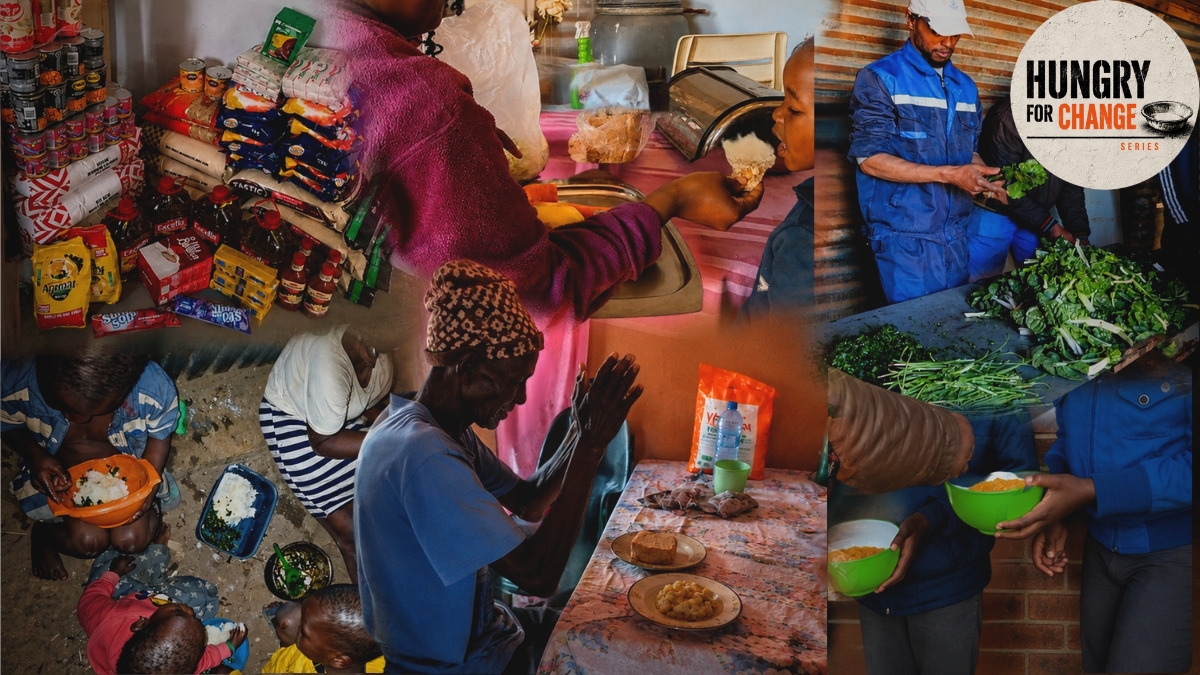
Part 8 | Hungry for change: When hunger becomes a health crisis
Health and nutrition experts say the health consequences of South Africa’s food insecurity crisis can begin long before someone becomes sick enough to need hospital treatment. The scale of the crisis came under renewed scrutiny when the South African Human Rights Commission launched an inquiry late last year into the country’s food systems, amid estimates that around 14 million South Africans go to bed hungry. Over several weeks, Health-e News documented how seven households and communities across South Africa are struggling to put enough food on the table. In the final instalment of our Hungry For Change series, health and nutrition experts weigh in on what those meals – and the food people go without – can mean for their health. When hunger puts a child’s life at risk When Zinzi’s* toddler became sick in March, she had diarrhoea, was vomiting and was very weak. “I was told that my daughter was going to die and we were rushed to hospital,” the Lenasia South mother told Health-e News. Her daughter spent a week at Chris Hani Baragwanath Hospital. Zinzi says doctors told her the child was malnourished. She survived. But around 1,000 South African children die every year from preventable acute malnutrition. According to the Human Sciences Research Council (HSRC) almost 29% of children under five are also stunted, an indication of chronic undernutrition. Paediatric clinician and Wits Associate Professor Karl-Günter Technau, who spoke to Health-e News in his personal capacity, says inadequate nutrition can weaken children’s immunity and affect their development. “They will also struggle to do activities their peers can do and not be able to learn and play as easily as others. This may impact their development.” Technau says in his clinical experience, the problem is more often food insecurity than parents not knowing what children should eat. “It is more likely that a child comes from a home where there is general food insecurity than parents being poorly informed.” Association for Dietetics in South Africa (ADSA) nutritionist, Helen Donkin who analysed seven meals from communities in our series, says the first 1,000 days – from conception to a child’s second birthday – are particularly important. “Poor nutrition in this crucial window can have long lasting negative effects on growth and development,” she says. School meals can provide a buffer When caregivers at We Care Daycare Centre in Nyakallong in the Free State, realised that more than 200 children under the feeding scheme needed food beyond the school term, they kept the kitchen open during school holidays. “Because of high unemployment in Nyakallong, many families struggle to provide even one meal a day,” says Rebecca Ndaba, one of seven caregivers at the centre. South Africa’s National School Nutrition Programme provides meals to more than 9 million learners annually. Donkin found that We Care’s meal of samp and beans, pumpkin and tomato-and-onion relish was among the most nutritionally balanced of the seven meals she analysed. But some children rely on We Care’s school meals as their main – or only – meal of the day. “If there is only one meal a day, the child will struggle very much with energy levels needed for school and play, and importantly, also irritability and listlessness,” Technau says. Parents skip meals so children can eat Food insecurity also takes a toll on parents. Research into how caregivers stretch child support grants has found mothers and grandmothers eating less or skipping meals so children can eat. Technau says parents can become overwhelmed when they cannot provide enough food, while inadequate nutrition can also affect a mother’s physical health and pregnancy. Zinzi* told Health-e News that she struggles with fatigue, suicidal thoughts and missed periods. “I am humiliated by the way I feed my children.” She has resorted to selling sex to feed her children, but says there is still not enough food some days. Hunger can accelerate decline in older people In Emaxelegwini informal settlement near Ngcobo in the Eastern Cape, 68-year-old Gogo Toti regularly skips meals so her grandchildren can eat. “I have no choice but to make that daily sacrifice.” Gogo Toti, who has chronic arthritis, says she tries to eat before taking her medication. Dr Anu Abraham from the South African Geriatrics Society says inadequate nutrition can accelerate the loss of muscle mass and physiological reserve that comes with ageing. “Protein loss equates to muscle loss, equates to immunity issues and healing-related decline,” she says. A study of more than 4,600 South Africans aged 60 and older found that those experiencing food insecurity had almost twice the odds of developing functional disability over time compared with food-secure older adults. Abraham says malnutrition in older people can be missed because the deterioration is gradual. “You get this gradual reduction in muscle strength, energy and resilience,” she says. “People just attribute it to, ‘Oh, it’s all just old age. That’s normal,’ but in fact, it’s not normal.” According to Donkin, an unpredictable food supply can also make chronic conditions such as diabetes and hypertension, often found in older populations, harder to manage. AIDS Healthcare Foundation South Africa’s Dr Nombuso Madonsela echoes this. She warns that hunger affects treatment adherence for HIV-positive people. “Hunger accelerates disease progression, illness erodes earning potential, and reduced income deepens food insecurity, creating a cycle that medicine alone cannot break,” she wrote in a recent Health-e News op-ed. A full stomach is not enough “A full tummy does not equal meeting all your daily nutrient needs. Often high carbohydrate, high fat meals are filling, but many of these foods are low in protein and micronutrients,” says Donkin. Several meals analysed by Donkin during the series relied heavily on affordable filling staples such as pap and bread. The PMBEJD’s August 2026 Household Affordability Index shows the gap between what low-income households can afford and what adequate nutrition costs. Health-e News’s Hungry for Change series found mostly unemployed families reliant on social grants bridging this gap in different ways – from borrowing money and skipping meals to collecting
This post Part 8 | Hungry for change: When hunger becomes a health crisis first appeared on Health-e News and is written by Adél Van Niekerk
