
-
 By admin
- August 3, 2026
- 0 Comments
- 26th International AIDS conference i2026, AIDS, Aurum Institute, funding, Health, HIV, international AIDS Society, News, PEPFAR, PReP, South Africa, USAID, WHO
Health-e News
US funding cuts threaten South Africa’s HIV response as global leaders warn of widening health system disruptions
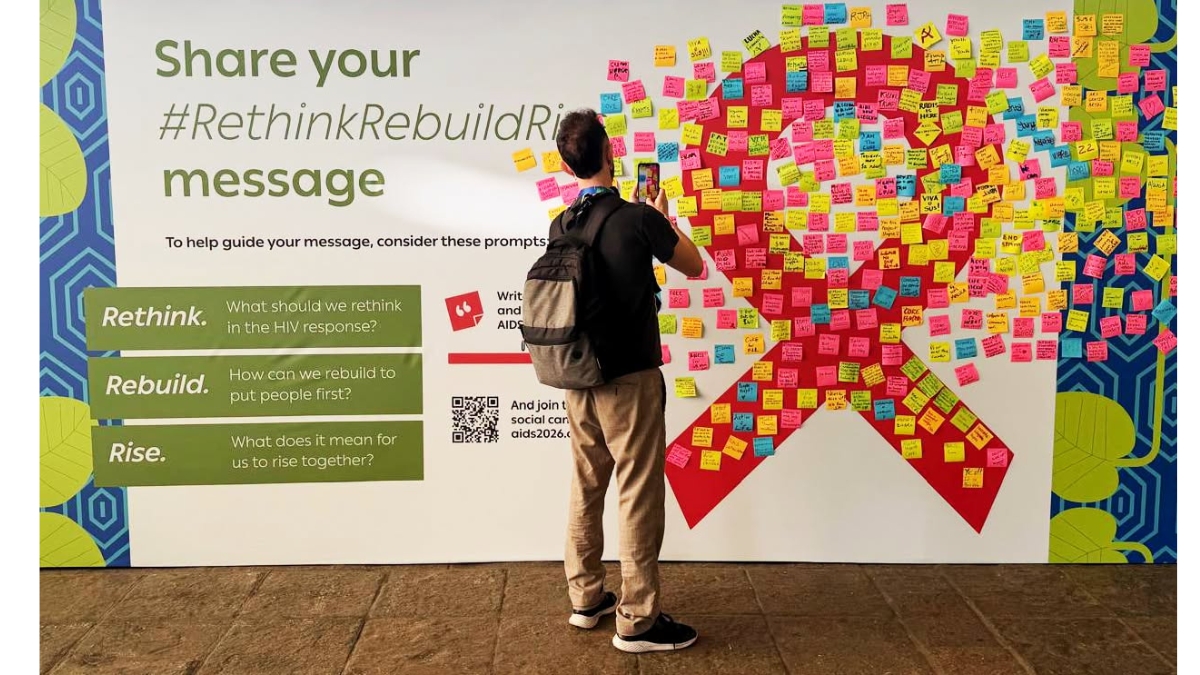
Decades of progress in the fight against HIV are at risk as funding cuts trigger global disruptions to health systems, leaving vulnerable communities with fewer services and placing the goal of ending AIDS as a public health threat by 2030 increasingly out of reach. At this year’s 26th International AIDS Conference in Rio de Janeiro in Brazil, Professor Linda-Gail Bekker, former president of the International AIDS Society and chief executive of the Desmond Tutu Health Foundation, warned that the world is not on track to meet the 2030 target. “As exciting as it was to see global leaders come together and renew their commitment, there’s a ton of work to be done before 2030,” Bekker said. She warned that the withdrawal of US funding would be felt particularly in HIV prevention and research, while South Africa’s PEPFAR funding is expected to end in March next year. In South Africa, more than 8 000 community health workers have been retrenched since funding cuts began in 2025, despite the country running the world’s largest HIV treatment programme. Key groups, including sex workers, LGBTQ+ communities, adolescents and migrant communities, are likely to be hardest hit. Funding cuts hit frontline healthcare Although the South African government continues to fund antiretroviral medicines, PEPFAR has historically financed thousands of healthcare workers, data capturers, counsellors and community organisations that help people get tested, start treatment and remain in care. “When HIV counsellors, nurses and outreach workers disappear, services such as tuberculosis screening, sexual and reproductive healthcare, maternal health services and disease surveillance are also weakened because many programmes are integrated within primary healthcare facilities,” Geoff Setswe, CEO of Aurum Institute, a leading African non-profit health organisation based in Johannesburg, told Health-e News. Setswe says in his first 120 days in office, Aurum alone has had to retrench more than 700 staff as funding has been withdrawn. Vital role of community health workers hangs in the balance Health-e News has reported extensively on the vital role community health workers play in South Africa’s HIV response, tracing patients who miss appointments, supporting treatment adherence and reconnecting people who have fallen out of care. Our recent reporting also highlighted the uncertain employment conditions many community health workers faced even before the funding cuts. Thousands of community health workers continue to work on short-term contracts while waiting for permanent employment. A recent South African study among community health workers in North West found that inadequate remuneration, poor logistical support, communication failures and stigma already undermined their ability to trace HIV and TB patients effectively. Despite these challenges, the community health workers described successfully returning many patients to care through home visits and community-based support. Authors of the study, published in the Open AIDS Journal, argue that these findings underscore the importance of sustaining this workforce. Study findings from elsewhere in Africa also show how quickly funding cuts can ripple through HIV programmes. A recent Ugandan study found that the abrupt PEPFAR funding freeze disrupted community outreach, viral load testing, patient tracing and HIV prevention services after community health workers, counsellors and data clerks were lost from the health system. UNAIDS warned delegates at this year’s conference that global HIV funding fell by 18% in 2025 to its lowest level in almost two decades. The agency cautioned that unless governments and donors act urgently, new HIV infections and AIDS-related deaths could begin rising again after years of steady decline. New UNAIDS data released at the conference show that 1.2 million people contracted HIV last year, while more than half a million people died from AIDS-related illnesses. Conference delegates warn progress is stalling As the 26th International AIDS Conference in Brazil drew to a close on Friday, global health leaders, scientists, activists and policymakers repeatedly warned that shrinking donor support could disrupt the fight against HIV and AIDS. Under the theme “Rethink. Rebuild. Rise.”, speakers stressed that the world is facing an unprecedented funding crisis despite remarkable scientific advances in HIV prevention and treatment. Activists interrupted a speech by US Global AIDS Coordinator, Jeff Graham with chants demanding that PEPFAR funding be restored. They argued that financial decisions are already costing lives in countries that depend on international partnerships to sustain HIV programmes. South Africa’s delegation, led by Deputy Health Minister Dr Joe Phaahla, acknowledged that the country faces growing pressure to strengthen domestic financing while ensuring that millions of people living with HIV continue receiving uninterrupted care. Phaahla said countries would increasingly need to build sustainable HIV programmes, supported by strong institutions, financing mechanisms, health workforces and community partnerships. Science advances, funding retreats Experts at the conference emphasised that the challenge is no longer scientific. Effective HIV medicines, prevention tools such as oral medicine, PrEP and long-acting injectable treatments already exist. The greatest threat now is the erosion of health systems caused by declining investment. For people who face poverty or stigma, or who live in rural areas far from healthcare services, accessing a daily pill or an every-other-month injection can be close to impossible. Lenacapavir would provide strong protection against HIV while only requiring patients to access healthcare twice a year. A mathematical modelling study by the World Health Organisation and the United Nations estimate that widespread availability of Lenacapavir could prevent 41% of new HIV infections in South Africa, Zimbabwe and western Kenya. However, when the WHO recommended global investment in Lenacapavir for HIV prevention in 2025, the Trump administration was already dismantling USAID. It had provided 73% of donor-funded resources for HIV prevention globally, according to a study published in The Lancet Global Health. “We have these major achievements in prevention,” said Beatriz Grinsztejn, president of the International AIDS Society, during a conference press briefing. “On the other hand, we are facing these major funding cuts that are affecting deeply the delivery not only of these new prevention technologies but also decreasing the number of people engaged in care, engaged in prevention services,” Grinsztejn said. The South African delegate cautioned that, without urgent action to restore funding and strengthen
This post US funding cuts threaten South Africa’s HIV response as global leaders warn of widening health system disruptions first appeared on Health-e News and is written by Nthusang Lefafa
